Federica Santuccio: The Art of Becoming Light
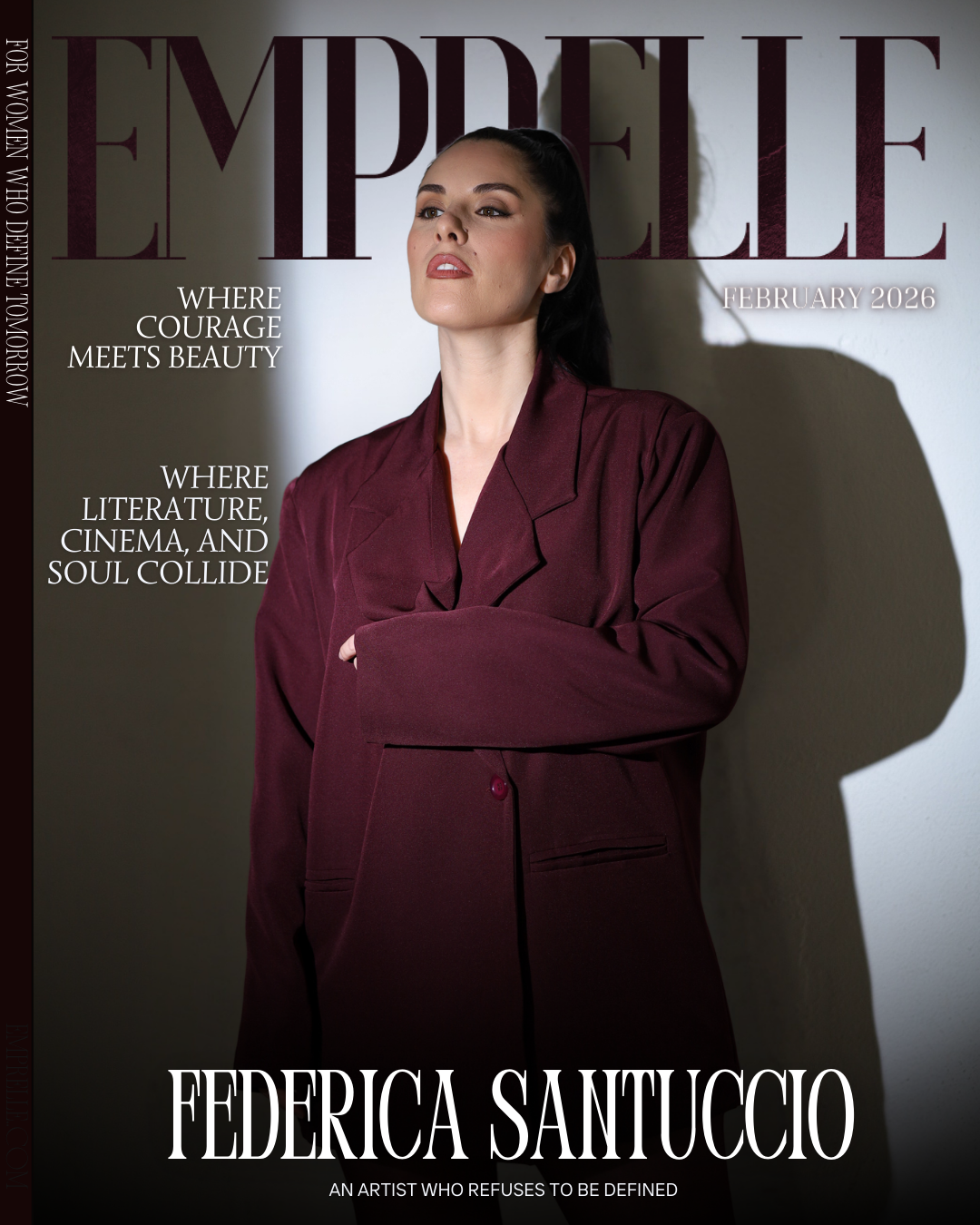
Born in Rome on December 4, 1992, Federica Santuccio has never approached art as a profession alone. For her, it has always been something closer to a calling — a total, immersive vocation that demands courage, vulnerability, and relentless reinvention. From singing on national television at just fifteen to writing award-winning novels and starring in films she conceived herself, Santuccio’s journey reads less like a linear career path and more like a continuous unfolding of artistic identity.
The First Stage: A Voice at Fifteen
Every artist has a moment when the dream becomes tangible. For Santuccio, that moment arrived early. Singing was her first language of expression — the way she translated emotion into sound before she had the words for it. At only fifteen, she performed on Rai Uno, an experience that crystallized her understanding of who she wanted to become.
The stage did not intimidate her; it clarified her. Standing under the lights, she felt something rare: not the thrill of applause, but the certainty of purpose. Art was not going to be a hobby or an experiment. It would be her life.
Writing as Revelation
If singing opened the door, writing deepened the room.
In 2017, she published her first autobiographical novel, La chiave blu (“The Blue Key”). More than a literary debut, the book represented a form of self-consecration. It allowed her to shape her personal experiences into narrative, transforming memory into meaning. The novel marked her arrival as a writer capable of introspection without self-indulgence — someone who understood that vulnerability, when crafted with honesty, becomes strength.
But Santuccio was not content to remain in one artistic dimension. Writing did not replace performance; it expanded it. For her, every medium is a different register of the same emotional instrument.
In 2021, she released her second book, 100 stanze mai aperte (“100 Rooms Never Opened”), a title that feels metaphorical of her own artistic exploration. From its pages emerged a short film adaptation that reached the finals of the Spello Film Festival in 2022. The transition from book to screen was not accidental — it revealed her instinct to see stories as living entities, capable of shifting forms while preserving their emotional core.
The Discipline of Acting
While writing refined her inner voice, acting demanded a different kind of discipline: embodiment.
In 2019, she graduated from the Accademia Artisti, formalizing years of instinctive performance into structured craft. Training sharpened her technique, but it did not tame her intensity. Instead, it gave her tools to channel it.
Her early roles in cinema marked the beginning of steady growth. Not explosive fame, not overnight transformation — but something arguably more important: consistency. Each character became an exploration of emotional nuance, each set a laboratory for deeper truth.
Acting, for Santuccio, is not about imitation. It is about excavation. She does not simply portray; she searches.
Writing the Screen
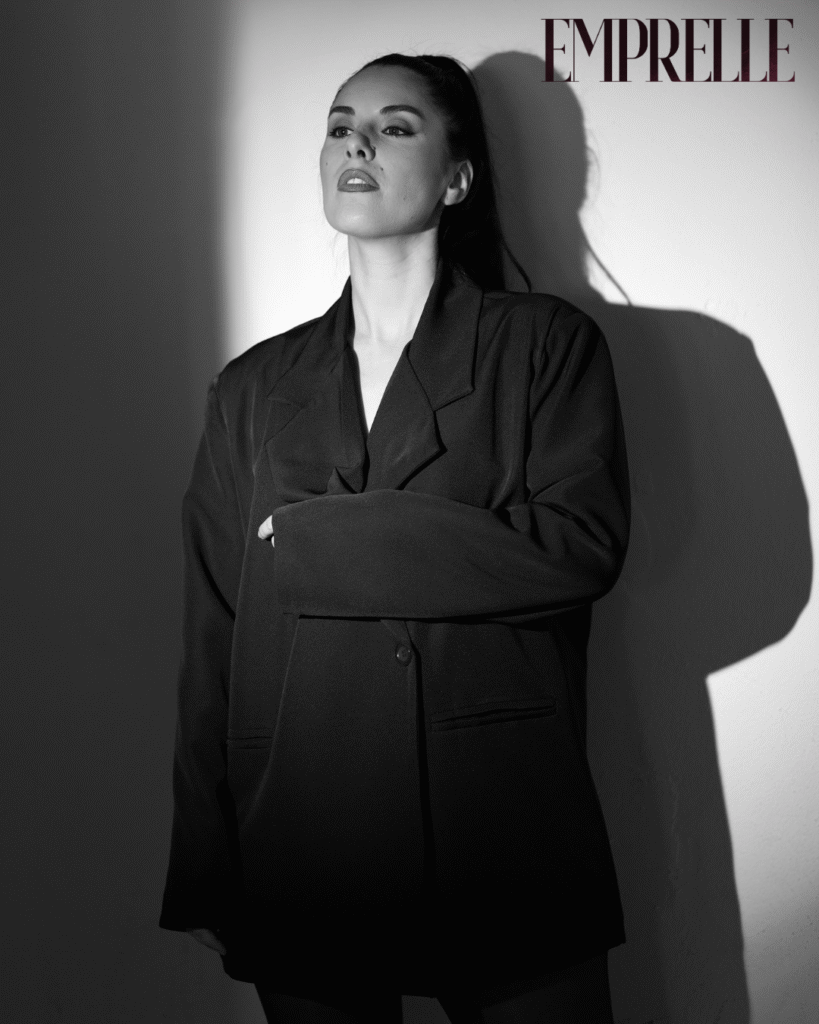
In 2023, that search took another decisive turn. Together with Francesco Marchina, professor of Acting at the Accademia Artisti in Milan, she co-wrote the screenplay for her first film, La mia luce (“My Light”). The title alone suggests something deeply personal — an assertion of identity through creation.
To write for the screen is to think visually, structurally, rhythmically. It requires the synthesis of literary sensitivity and cinematic awareness. For Santuccio, this step represented a natural evolution. She was no longer only interpreting stories; she was architecting them.
The following year brought another milestone. Her book Tu, Artista earned her the prestigious Premio Vincenzo Crocitti, recognizing her contribution to the arts. Awards, of course, are external validations. But what stands out in her trajectory is not the trophy — it is the continuity. Each achievement seems less like a destination and more like a bridge.
Cinema as Personal Testimony
In 2024, she became the protagonist of T’immagino ancora, a film written by herself and inspired by a true story. To write and then inhabit your own script is a rare artistic act. It demands not only technical skill but emotional transparency. The distance between creator and performer collapses. The result can be powerful — and deeply exposing.
Among her recent works is also A Second Chance, further consolidating her presence in contemporary cinema. Yet perhaps what defines her current phase most clearly is multiplicity. She is simultaneously on set for the second season of the Pompeii series, playing one of the new leading roles, while supporting the filming of another new movie in parallel.
The rhythm is intense. The commitment, total.
Literature with a Social Heart
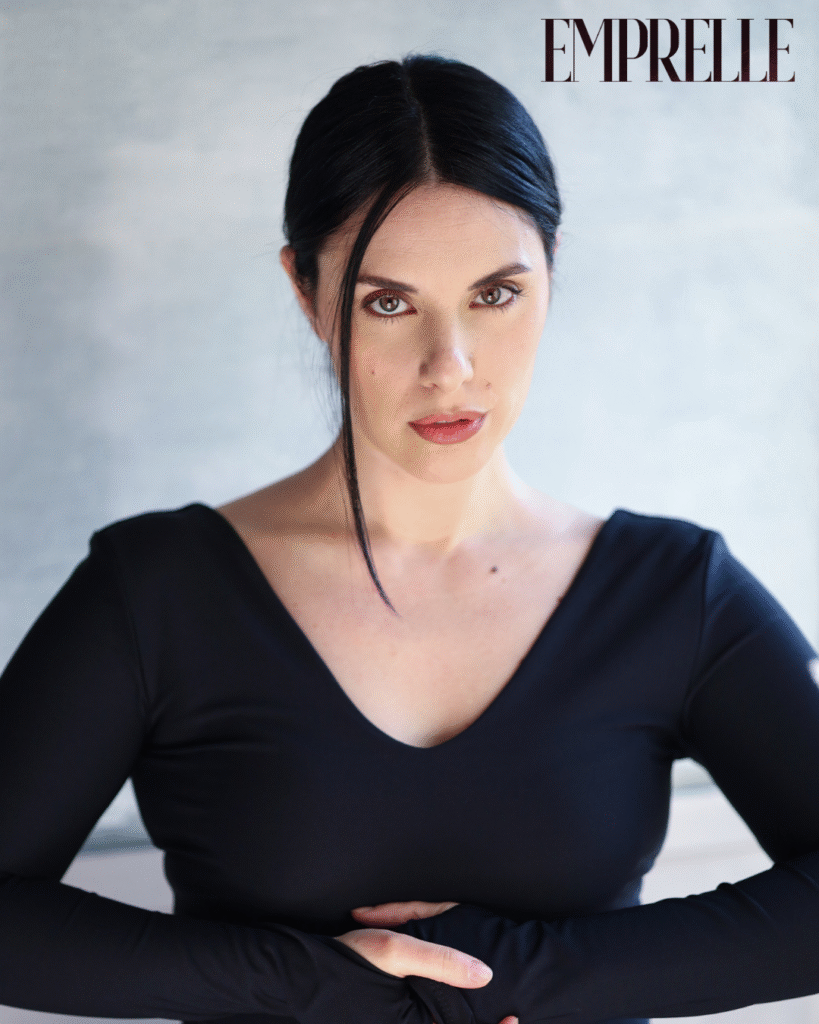
Beyond performance and fiction, Santuccio’s writing reveals a strong ethical dimension. Her fourth book, Heart Without a Cradle, is dedicated to unborn children — a subject of profound emotional and social resonance. Here, art becomes advocacy. The narrative voice shifts from personal exploration to collective empathy.
This willingness to confront delicate themes reflects a broader pattern in her career: she does not avoid emotional complexity. She moves toward it.
A Coherent Evolution
What makes Federica Santuccio’s trajectory compelling is not simply her versatility — singer, novelist, screenwriter, actress — but the coherence behind it. There is a visible thread connecting each chapter: the pursuit of emotional authenticity.
From the teenage girl singing on national television to the award-winning author and film protagonist, the essence remains constant. She does not fragment herself across disciplines; she integrates them.
Art, in her life, is not compartmentalized. It is continuous.
In a cultural landscape often driven by speed and superficial visibility, Santuccio’s journey stands out for its depth. She builds patiently. She studies. She writes. She performs. She risks. And, above all, she persists.
The Future: Becoming Light Again
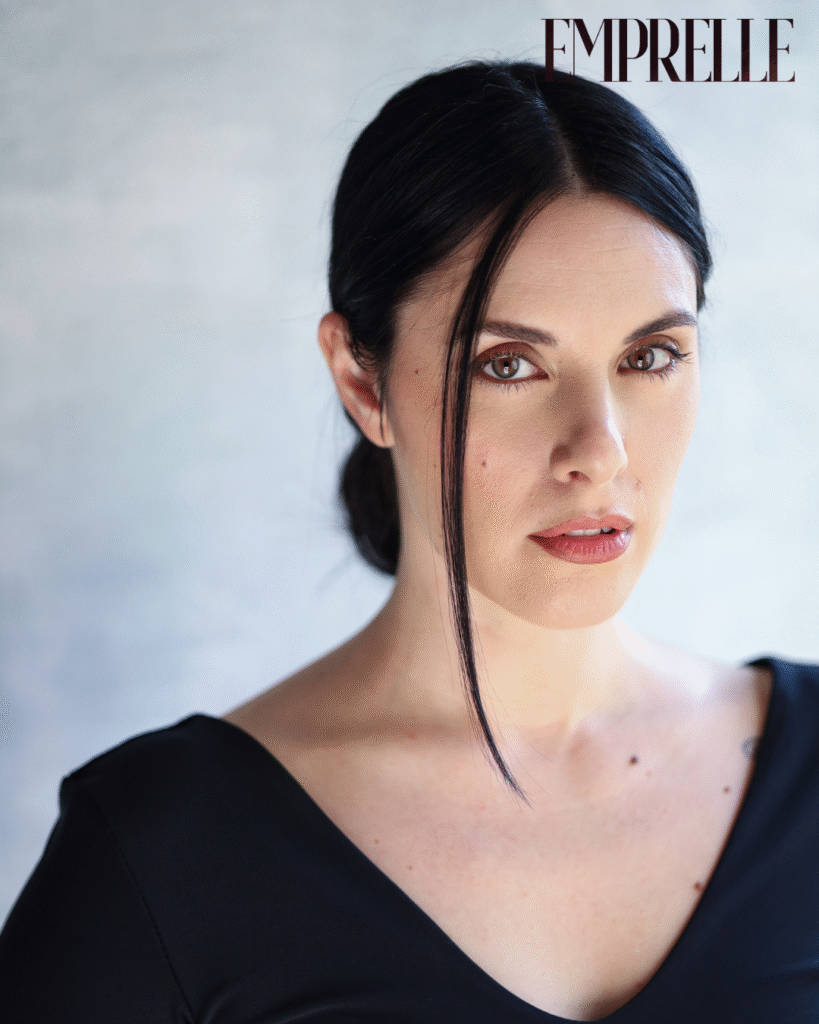
If La mia luce signaled her desire to define her own artistic illumination, her current projects suggest that the light is expanding. With new film roles, ongoing television work, and literary success, she inhabits a moment of consolidation — not of arrival, but of momentum.
For Federica Santuccio, art has never been a single act. It is a continuum of becoming.
And perhaps that is the most striking aspect of her story: she does not chase visibility; she cultivates meaning. She does not perform art; she lives it.
In the end, what began in Rome in 1992 as a young girl’s passion for singing has evolved into something far larger — a multidisciplinary career defined by courage, discipline, and creative integrity. She has sung under bright lights, written in solitude, stood before cameras, and crafted scripts that carry her own voice.
Yet through every transformation, one truth remains: for Federica Santuccio, art is not an ambition.
It is a destiny she continues to choose — every single day.